Choosing between an ultrasonic and an electromagnetic flow meter is not simply a question of which technology is more advanced. The correct choice depends on the liquid, pipe, installation conditions, measurement objective, and maintenance strategy. For process engineers, water and wastewater operators, OEMs, system integrators, distributors, and industrial buyers, the comparison should begin with the application rather than the instrument name.
Ultrasonic flow meters use sound waves to determine flow velocity. Electromagnetic flow meters measure conductive liquids by applying a magnetic field across the flow tube and detecting the voltage generated as the liquid moves through it.
How Ultrasonic and Electromagnetic Flow Meters Work
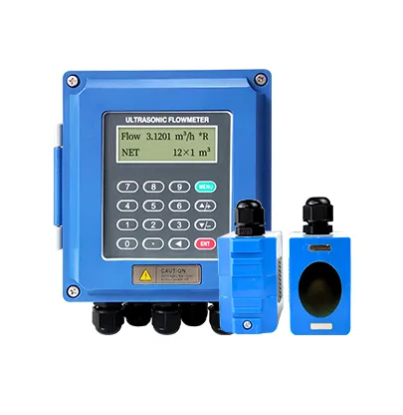
A transit-time ultrasonic flow meter sends acoustic signals through the fluid and compares the travel time of signals moving with and against the flow. Clamp-on sensors are mounted outside the pipe, allowing measurement without cutting the line or contacting the liquid. Inline ultrasonic meters are also available.
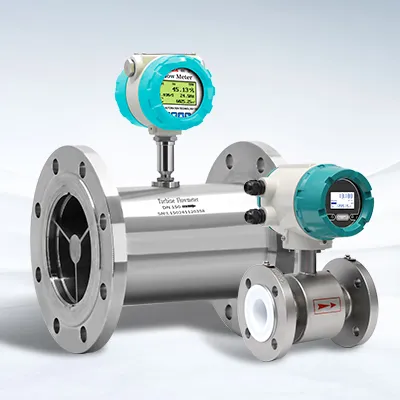
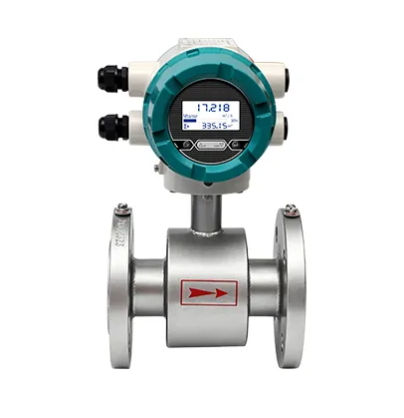
An electromagnetic flow meter, often called a magmeter, uses Faraday’s law of electromagnetic induction. As a conductive liquid passes through the magnetic field inside the sensor, electrodes detect a voltage related to fluid velocity. Its unobstructed measuring tube normally creates little additional pressure loss and contains no moving measuring parts.
Key Differences in Media Compatibility and Installation
The first selection question is whether the liquid is electrically conductive. Electromagnetic flow meters are designed for conductive liquids such as water, wastewater, acids, alkalis, and many slurries. They are generally unsuitable for gases, steam, hydrocarbons, and liquids below the model’s specified minimum conductivity.
Ultrasonic technology is not limited by electrical conductivity. It can be considered for conductive or nonconductive liquids when the fluid and pipe transmit the signal effectively. Transit-time measurement normally performs best when the liquid is reasonably clean. Excessive bubbles, suspended solids, heavy pipe scaling, poor liner condition, or incorrect pipe data can reduce signal quality.
Installation is another major difference. A clamp-on ultrasonic meter can be fitted outside an existing pipe, making it attractive for retrofit projects, temporary testing, energy audits, large pipelines, or locations where shutting down the process would be difficult. An electromagnetic meter is normally installed inline and requires planned pipe work.
Both technologies still require correct installation. Ultrasonic performance depends on pipe diameter, wall thickness, material, lining, sensor spacing, and coupling. Electromagnetic meters require a full pipe, suitable grounding, compatible liner and electrode materials, and installation according to the manufacturer’s recommendations.
Ultrasonic vs Electromagnetic Flow Meter Comparison
| Selection factor | Ultrasonic flow meter | Electromagnetic flow meter |
|---|
| Measurement principle | Uses ultrasonic signals | Uses electromagnetic induction |
| Liquid conductivity | Not the primary limitation | Liquid must meet conductivity requirements |
| Installation | Clamp-on models require no pipe cutting | Normally installed inline |
| Contact with liquid | None for clamp-on models | Liner and electrodes contact the liquid |
| Clean water | Strong retrofit and large-pipe option | Strong permanent-measurement option |
| Wastewater or slurry | Application-dependent | Common for conductive wastewater and slurry |
| Pressure loss | None from clamp-on sensors | Usually negligible |
| Temporary testing | Well suited to portable work | Usually selected for permanent service |
This table is a starting point rather than a substitute for application review. Different ultrasonic methods and meter designs have different operating limits, while minimum conductivity requirements can vary among electromagnetic flow meter models.
When an Ultrasonic Flow Meter Is the Better Choice
An ultrasonic flow meter is often practical when the pipeline cannot be opened, the process must remain online, or the buyer needs portable measurement. Clamp-on systems can also be useful where direct contact with the liquid is undesirable, provided the pipe and fluid are suitable for ultrasonic transmission.
Typical situations include:
Retrofitting an existing water line without cutting the pipe
Surveying several locations with one portable meter
Checking pump or distribution-network performance
Measuring large pipes where external installation is preferred
Conducting temporary verification or troubleshooting
The main risk is assuming that clamp-on installation guarantees reliable measurement in every pipeline. Pipe condition, fluid composition, bubbles, solids, and sensor placement must still be reviewed before selection.
When an Electromagnetic Flow Meter Is the Better Choice
An electromagnetic flow meter is often preferred for permanent measurement of conductive liquids in water treatment, wastewater, chemical processing, slurry handling, dosing, and industrial utility systems.
It is especially useful when the liquid contains suspended solids or when the application requires an unobstructed measuring tube without rotating components. Liner and electrode materials should be selected according to the chemical and temperature conditions of the process.
Typical situations include:
Continuous influent or effluent monitoring
Conductive chemical flow measurement
Wastewater and sludge pipelines
Filling or batching conductive liquids
Permanent integration with a process-control system
Conductivity must be confirmed before selection. The pipe should remain full, and the installation should avoid severe air entrainment, empty-pipe conditions, and unsuitable grounding.
How to Select the Right Technology
A reliable selection process should review:
Liquid name, conductivity, solids, bubbles, viscosity, and corrosiveness
Pipe size, material, wall thickness, lining, and current condition
Minimum, normal, and maximum flow rates
Process pressure and temperature
Required accuracy and repeatability
Available installation space and pipe access
Whether the line can be stopped and modified
Output, communication, power, and control requirements
Whether the measurement is temporary or permanent
Fluid type, process conditions, accuracy requirements, pipe size, and installation limitations are among the principal factors used when selecting a flow measurement technology.
For clean water in an existing pipe that cannot be interrupted, clamp-on ultrasonic measurement may be the stronger starting point. For permanent monitoring of conductive wastewater or slurry, an electromagnetic flow meter may provide a more direct solution.
JUJEA supports industrial flow measurement projects across liquid and gas applications. Share your medium, pipe data, flow range, operating conditions, and installation constraints so the appropriate technology can be evaluated around the actual process.
Frequently Asked Questions About Ultrasonic and Electromagnetic Flow Meters
What is the main difference between an ultrasonic and an electromagnetic flow meter?
An ultrasonic flow meter uses acoustic signals to determine fluid velocity. An electromagnetic flow meter uses electromagnetic induction and therefore requires the measured liquid to meet the conductivity requirements of the selected meter.
Can an ultrasonic flow meter measure wastewater?
It may be suitable, but the result depends on the measurement method, fluid condition, suspended solids, bubbles, pipe material, pipe lining, and signal quality. The complete application should be reviewed before selecting an ultrasonic meter.
Can an electromagnetic flow meter measure clean water?
Yes. Electromagnetic flow meters can measure clean water when the liquid meets the meter’s minimum conductivity requirement and the measuring pipe remains full during operation.
Which flow meter is easier to install?
A clamp-on ultrasonic flow meter is usually easier to retrofit because its sensors are installed outside the pipe without cutting into the pipeline. An electromagnetic flow meter is normally installed inline and requires pipe modification or planned installation.
Which technology is more suitable for wastewater and slurry?
Electromagnetic flow meters are commonly considered for conductive wastewater, sludge, and slurry because the measuring tube has no moving measuring parts and can accommodate liquids containing suspended solids. Final suitability still depends on the selected liner, electrode materials, conductivity, temperature, and process conditions.
What information is required to select the right flow meter?
Provide the liquid name, conductivity if known, pipe diameter, pipe material, wall thickness, lining, flow range, pressure, temperature, solids or bubbles, required accuracy, output signal, installation photographs, and whether the pipeline can be stopped or modified.
Further Reading and Industry Resources
Ethan Liu
Ethan Liu is JUJEA's technical content specialist, translating complex sensor integration and industrial automation concepts into practical insights for engineers, system integrators, procurement professionals, and decision-makers worldwide.


 한국어
한국어 français
 Deutsch
 Español
 italiano
 русский
 português
 العربية
 tiếng việt
 čeština