Measuring high-viscosity liquids requires more than matching a meter to the pipe size. Oils, resins, adhesives, coatings, syrups and polymers create greater flow resistance and may change with temperature. For process engineers, equipment manufacturers, system integrators, distributors and industrial buyers, the right flow meter for high-viscosity liquids should be selected according to viscosity, flow range, pressure, temperature, allowable pressure loss, solids content, cleaning method and whether mass or volume flow is required.
Oval gear and Coriolis flow meters are usually strong starting points. Turbine flow meters may work with clean, lower-viscosity liquids, but their measurement performance can be affected as viscosity increases. JUJEA’s published product information similarly positions oval gear meters for high-viscosity media and turbine meters primarily for lower-viscosity liquids.
Why Viscosity Matters in Flow Measurement
Viscosity describes a liquid’s resistance to flow. As viscosity rises, more pressure is normally required to move the product through pipes and measuring instruments. Many oils, resins, syrups and coatings become thinner when heated and thicker when cooled.
A meter should therefore be evaluated across the actual operating range. Buyers should provide viscosity at minimum, normal and maximum process temperatures rather than relying on a single nominal value.
High-viscosity applications may also involve deposits, crystallization, entrained air, abrasive particles or frequent cleaning. Meter materials, seals, internal passages and moving components must be compatible with the product. Pressure loss is particularly important because both positive-displacement and Coriolis meters can create increased resistance when measuring very viscous fluids.
Oval Gear Flow Meters for Viscous Liquids
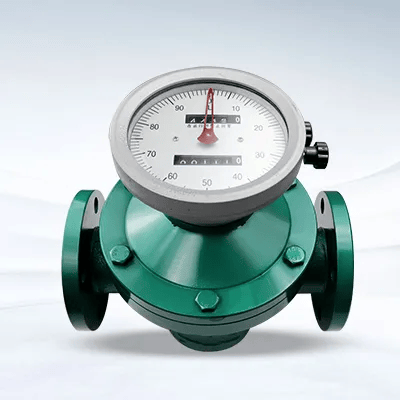
An oval gear flow meter is a positive-displacement meter. Two gears rotate inside a measuring chamber, repeatedly trapping and transferring fixed volumes of liquid. This direct volumetric principle is well suited to clean, viscous liquids and low flow rates.
Typical applications include:
Lubricating oil
Fuel oil
Hydraulic oil
Asphalt
Resin
Syrup
Ink
Oval gear meters are often selected for batching, transfer, dosing and totalizing. Their key advantages include good low-flow sensitivity, direct volume measurement, repeatable batching and limited dependence on long upstream or downstream straight-pipe runs.
The main limitation is the presence of moving gears. Hard particles may cause wear or jamming, while products that crystallize or leave deposits can increase cleaning requirements. Pressure loss must also be checked because very thick liquids may require more pump pressure to pass through the measuring chamber.
Coriolis Flow Meters for High-Viscosity Applications
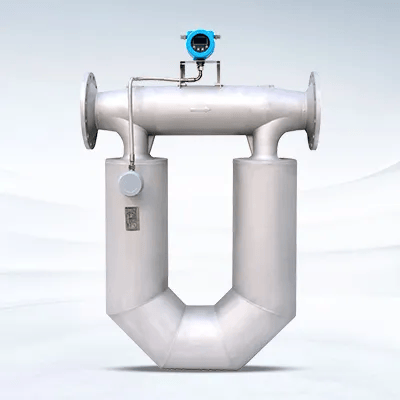
A Coriolis flow meter directly measures mass flow by detecting changes in the vibration of one or more measuring tubes. Many models can also provide density, temperature and calculated volume flow, while selected designs can provide viscosity-related measurements.
Coriolis technology is often preferred when a process requires:
Direct mass-flow measurement
Higher measurement accuracy
Density or temperature information
Recipe and quality control
Batching or dosing
Monitoring of changing products
It can be considered for oils, chemicals, syrups, chocolate, coatings and other viscous liquids. Endress+Hauser lists fuels, crude oil, vegetable oils, latex and other thick products among common Coriolis applications.
Unlike an oval gear meter, a Coriolis meter has no rotating measuring parts. However, highly viscous liquids can create substantial pressure loss, so meter size, tube geometry, operating temperature and available pump pressure must be reviewed. Straight-tube Coriolis designs may be considered where reducing pressure loss is especially important.
Air bubbles are another important factor. Entrained gas can disturb measuring-tube vibration and reduce measurement stability. Pump location, pipe orientation, product degassing and full-pipe conditions should therefore be considered during installation.
Are Turbine Flow Meters Suitable for High Viscosity?
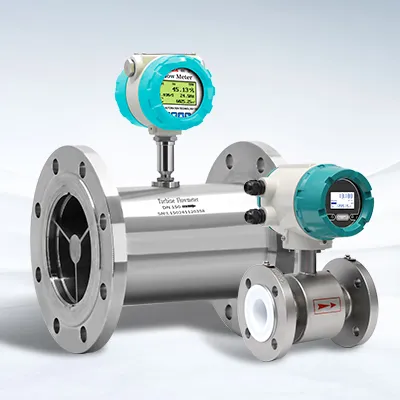
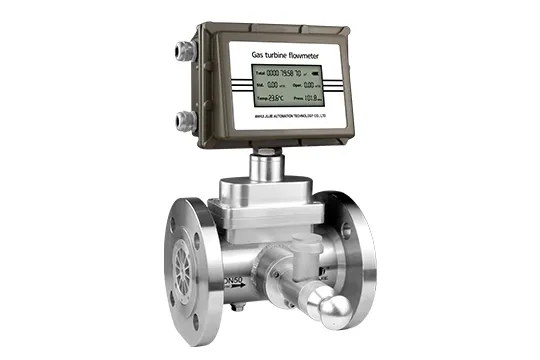
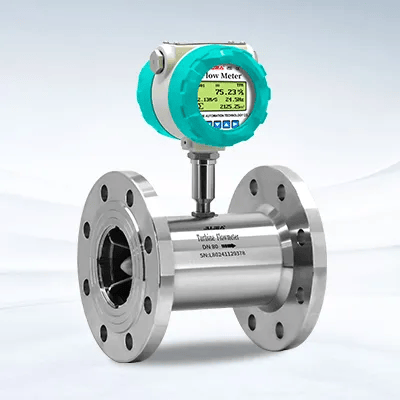
A turbine flow meter uses the flowing liquid to rotate an internal rotor. The rotor speed is related to fluid velocity, allowing the instrument to calculate flow.
Turbine meters are commonly used for clean, low-viscosity liquids such as water, light oil and solvents. As viscosity increases, drag on the rotor also increases, which may reduce the usable flow range and measurement performance. JUJEA’s liquid-flow product information positions turbine flow meters mainly for lower-viscosity fluids.
A turbine meter may still be considered when:
The liquid is clean
Viscosity is relatively low and stable
Sufficient flow velocity is available
The meter is sized for the actual fluid
Process conditions remain stable
For heavy oil, thick resin, adhesive or asphalt, an oval gear or Coriolis meter is usually a more practical starting point.
Oval Gear vs Coriolis Flow Meter
| Selection factor | Oval gear flow meter | Coriolis flow meter |
|---|
| Primary output | Volume flow | Direct mass flow |
| Additional outputs | Usually totalized volume | Often density and temperature |
| Best suited for | Clean viscous liquids and low flow | High-accuracy, multivariable measurement |
| Moving measuring parts | Yes | No rotating parts |
| Low-flow performance | Generally strong | Depends on meter size and design |
| Pressure loss | Can rise with viscosity | Can also be significant |
| Typical cost direction | Usually lower | Usually higher |
An oval gear meter is often attractive for cost-effective volumetric measurement of clean, viscous liquids, including oil transfer, lubrication systems, batching and dosing.
A Coriolis meter is usually the stronger option when direct mass flow, density, temperature, higher accuracy or recipe control is important. The final choice should still be based on viscosity, pressure loss, flow range and installation conditions.
How to Select the Right Flow Meter
Before selecting a flow meter, provide:
Liquid name and composition
Viscosity at operating temperatures
Minimum, normal and maximum flow
Operating pressure and temperature
Pipe size and connection type
Presence of solids, crystals or entrained gas
Required mass-flow or volume-flow output
Accuracy, batching and communication requirements
Cleaning method and allowable pressure loss
Choose an oval gear flow meter when the product is clean and viscous, volumetric measurement is acceptable and low-flow performance is important.
Choose a Coriolis flow meter when direct mass measurement, density, temperature, recipe control or changing product properties are important, and the project can accommodate its cost and pressure-drop requirements.
JUJEA’s liquid-flow range includes oval gear and Coriolis flow meters, while its turbine meters are mainly positioned for lower-viscosity liquids. Share the product properties, viscosity, temperature, flow range, pressure and installation conditions so the most suitable measurement principle can be evaluated.
Frequently Asked Questions About High-Viscosity Flow Measurement
What flow meter is best for high-viscosity liquids?
Oval gear and Coriolis meters are common starting points. Oval gear meters suit clean, viscous liquids and volume measurement, while Coriolis meters suit direct mass flow and multivariable measurement.
Can an oval gear flow meter measure resin or heavy oil?
It may be suitable when the liquid is compatible with the meter materials, contains no damaging particles and remains within the allowable pressure loss.
Can a Coriolis meter handle changing viscosity?
Yes. Coriolis measurement is not based on rotor speed, but pressure loss, flow range, temperature and product behavior must still be checked.
Why are turbine meters less suitable for high viscosity?
Higher viscosity increases drag on the rotor and may reduce the meter’s usable flow range and measurement performance.
Does heating improve viscous-liquid measurement?
Heating often reduces viscosity and pressure loss, but the meter, seals and process connections must be suitable for the operating temperature.
Further Reading and Industry Resources
Ethan Liu
Ethan Liu is JUJEA's technical content specialist, translating complex sensor integration and industrial automation concepts into practical insights for engineers, system integrators, procurement professionals, and decision-makers worldwide.


 한국어
한국어 français
 Deutsch
 Español
 italiano
 русский
 português
 العربية
 tiếng việt
 čeština