Compressed-air flow measurement helps plants track consumption, compare production areas, verify energy-saving projects, and identify abnormal demand. When comparing a thermal mass vs vortex flow meter for compressed air, engineers should consider minimum flow, pipe size, air quality, pressure, temperature, installation space, output units, and maintenance requirements.
Both technologies can measure compressed air, but they use different principles. Thermal mass meters are often selected for direct mass-flow measurement and low-flow visibility. Vortex meters are commonly considered for stable inline measurement when flow remains within the specified velocity range. The U.S. Department of Energy recommends considering meter type, air condition, installation, pressure loss, accuracy, repeatability, and turndown.
How Thermal Mass and Vortex Flow Meters Work
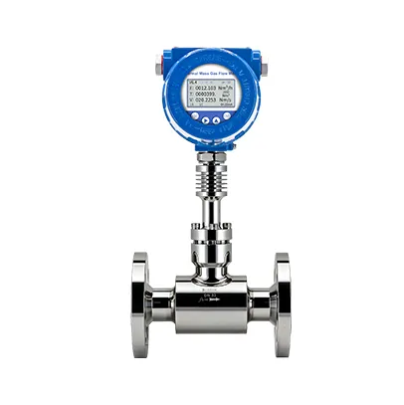
A thermal mass flow meter measures how much heat moving gas removes from a heated sensor. As compressed-air mass flow increases, the cooling effect changes, and the transmitter converts that relationship into a mass-flow value. Thermal meters are available in inline and insertion designs. Insertion probes can be useful on larger headers because they create limited obstruction.
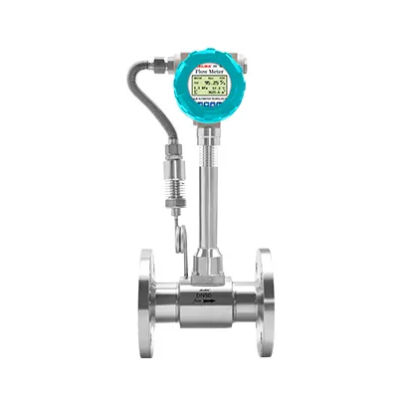
A vortex flow meter uses a bluff body, often called a shedder bar, installed in the flow path. As compressed air passes it, alternating vortices form downstream. Their frequency is proportional to flow velocity, allowing the meter to calculate volumetric flow. Correct sizing is important because stable measurement depends on consistent vortex formation.
Thermal Mass vs Vortex Flow Meter Comparison
| Selection factor | Thermal mass flow meter | Vortex flow meter |
|---|
| Measurement principle | Heat transfer from a heated sensor | Vortices behind a shedder bar |
| Primary output | Direct mass flow | Primarily volumetric flow |
| Low-flow performance | Usually stronger | Requires sufficient velocity |
| Installation | Inline or insertion | Normally inline |
| Pressure loss | Low with insertion probes | Depends on meter body |
| Air quality | Deposits can affect sensor response | Condensate and disturbed flow matter |
| Other media | Mainly gases | Suitable models can measure gas, liquid, and steam |
This comparison is only a starting point. Flow range, line size, pressure rating, temperature limits, accuracy, and installation requirements must be checked against the selected model.
When to Choose a Thermal Mass Flow Meter
A thermal mass flow meter is often the stronger option when the main objective is to see low compressed-air consumption and changing demand. Better low-flow sensitivity can help reveal base-load consumption and unexpected off-shift air use.
Typical applications include production-line submetering, departmental cost allocation, energy-efficiency studies, insertion measurement on large pipes, and post-maintenance monitoring. JUJEA’s thermal gas mass flow meter information identifies compressed air as an application and highlights low-flow sensitivity and a probe-style design.
Air quality remains important. Oil aerosol, moisture, dust, and deposits on the sensing surface can alter heat transfer and influence measurement. The meter should be installed where air treatment and condensate control are suitable. Gas composition should also match the configured calibration because thermal characteristics affect the measurement relationship.
Thermal mass measurement may therefore be a suitable starting point for facilities that need to:
Monitor compressed-air use by department or production line;
Identify consumption during shutdown periods;
Compare demand before and after efficiency improvements;
Measure lower flows on branch lines;
Install insertion probes on larger distribution pipes;
Output mass flow or standardized consumption data.
The final choice should still be based on the selected meter’s measurable range and the actual compressed-air condition.
When to Choose a Vortex Flow Meter
A vortex flow meter may be the better option when compressed-air flow is relatively stable and remains above the meter’s minimum measurable velocity. It is commonly considered for permanent inline monitoring on utility headers or process-air lines with a predictable operating range.
Vortex technology can also suit plants using similar instruments for compressed air, other gases, water, or steam. Because vortex meters primarily measure volumetric flow, standardized-volume or mass-flow reporting may require pressure and temperature compensation, depending on the selected instrument and required output.
Installation conditions are critical. Elbows, valves, reducers, and other upstream disturbances can create swirl or uneven velocity profiles. Vortex meters therefore need suitable straight-pipe sections and installation according to the manufacturer’s recommendations.
Vortex measurement may be suitable when a project requires:
Permanent inline measurement;
Stable flow on a compressed-air main header;
Moderate or consistently high flow velocity;
Measurement technology that can also serve other utility media;
Volumetric flow measurement with suitable compensation;
Integration into an existing process-control system.
A vortex meter should not be selected only because the nominal pipe diameter matches. Minimum flow is particularly important because insufficient velocity may prevent stable vortex formation.
Air Quality, Pressure Loss, and Maintenance
Compressed-air systems may contain oil, water droplets, rust, or particles. Thermal sensors may need inspection or cleaning if deposits accumulate. Vortex meters do not use the same heated element, but condensate, severe vibration, and unstable flow can still affect performance.
An insertion thermal probe normally creates limited obstruction. A vortex meter contains a shedder bar, so pressure loss depends on body design, line size, and operating flow. Maintenance planning should also consider access, shutdown requirements, calibration, and diagnostics.
Neither technology is maintenance-free in every application. Meter location, compressed-air treatment, accessibility, and process stability should be reviewed before installation. A meter installed downstream of suitable treatment equipment may experience different operating conditions from one installed close to the compressor.
How to Select the Right Compressed-Air Flow Meter
Before selecting either technology, provide:
Pipe diameter, material, and connection type;
Minimum, normal, and maximum flow;
Operating pressure and temperature;
Dry, wet, lubricated, or oil-free air;
Expected condensate, oil aerosol, dust, or rust;
Available upstream and downstream straight pipe;
Inline or insertion installation preference;
Actual volume, standardized volume, or mass-flow output;
Totalizer, alarm, analog output, and communication requirements;
Need for low-flow or base-load monitoring.
Choose a thermal mass flow meter when low-flow visibility, direct mass measurement, broad operating range, and submetering are priorities.
Choose a vortex flow meter when flow is stable, sufficient velocity is available, permanent inline measurement is preferred, and the required straight-pipe and compensation conditions can be met.
JUJEA offers thermal gas mass flow meters, vortex flow meters, and compressed-air flow-measurement solutions. Share your pipe size, flow range, pressure, temperature, air quality, installation position, and required output so the application can be evaluated around actual operating conditions.
Frequently Asked Questions
Which meter is better for low compressed-air consumption?
A thermal mass flow meter is generally the stronger starting point because it usually offers better visibility at the low end of the operating range. Correct sizing, air treatment, and sensor cleanliness still matter.
Can a vortex flow meter measure compressed air?
Yes. A correctly sized vortex flow meter can measure compressed air when velocity, pressure, temperature, pipe conditions, and straight-pipe requirements remain within specifications.
Does a thermal mass meter require compensation?
It directly measures mass flow through heat transfer, but gas composition and differences between actual and configured conditions can still influence performance.
Which technology creates less pressure loss?
An insertion thermal mass meter usually creates limited obstruction. A vortex meter includes a shedder bar, so pressure loss depends on its body, size, and operating flow.
What information is required for selection?
Provide pipe dimensions, flow range, pressure, temperature, air quality, treatment equipment, installation photographs, straight-pipe length, required units, and communication signals.
Further Reading and Industry Resources
Ethan Liu
Ethan Liu is JUJEA's technical content specialist, translating complex sensor integration and industrial automation concepts into practical insights for engineers, system integrators, procurement professionals, and decision-makers worldwide.


 한국어
한국어 français
 Deutsch
 Español
 italiano
 русский
 português
 العربية
 tiếng việt
 čeština