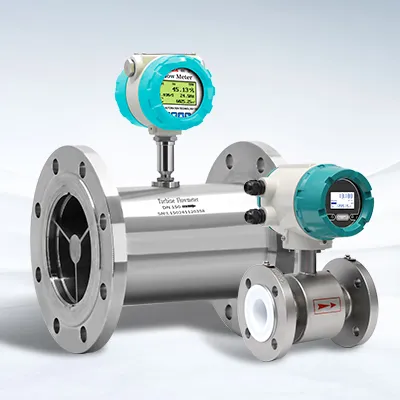
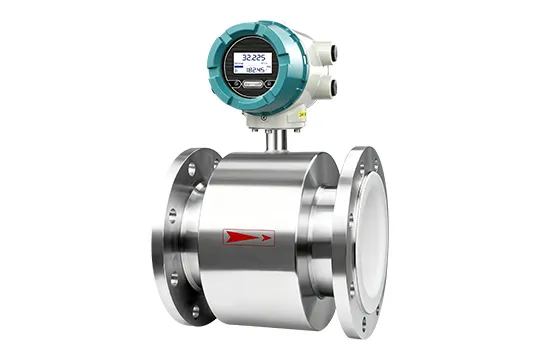
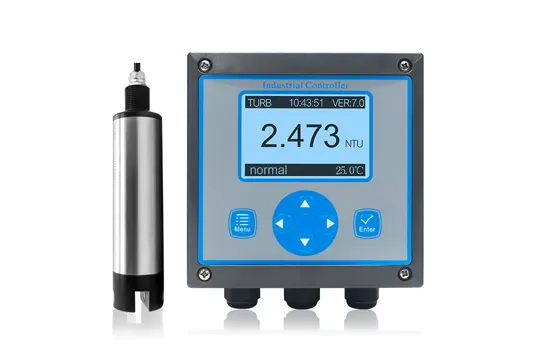
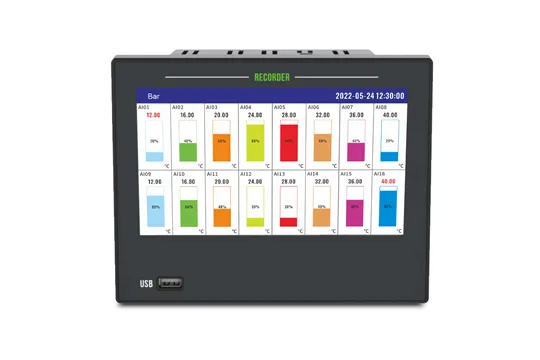
As a professional manufacturer of flow meters, we are well aware of the crucial role of pressure transmitters in industrial measurement systems. This article summarizes five common fault phenomena and their on-site solutions to help users quickly diagnose problems, reduce downtime, and enhance system reliability. These solutions are applicable to operators in industries such as oil, chemical, water treatment, and energy management.
1. Pressure rises, but the transmitter output remains unchanged.
(1) Possible causes:
Pressure interface leakage or blockage
Power or wiring abnormalities
Sensor zero output without signal
(2) Solution steps:
Check the sealing of the interface and the blockage of the pressure guiding tube;
Confirm the correct power voltage and wiring method;
Perform a simple pressure increase to observe if the output changes;
If there is still no output, it may be a damaged sensor. It is recommended to contact the flow meter manufacturer for calibration or replacement.
2. When pressure is increased and the output does not change, there is a sudden jump at high pressure, and the zero position cannot return to zero after depressurization.
(1) Common causes:
(2) Handling methods:
Remove the sensor, check if the zero position is normal;
Replace the appropriate specification of the sealing ring and test again.
3. The output signal of the pressure transmitter fluctuates greatly.
(1) Possible factors:
The pressure source is unstable
The pressure transmitter has poor anti-interference ability
Mechanical vibration affects
Sensor itself is faulty
(2) Troubleshooting suggestions:
Confirm the stability of the pressure source;
Check the grounding and shielding lines;
Install shock-absorbing devices or change the installation position;
If still unstable, it may be necessary to replace the pressure transmitter.
4. The reading of the transmitter is significantly different from the pointer pressure gauge.
(1) Explanation:
(2) Recommended operation:
Compare with the accuracy range specified in the transmitter manual;
If the deviation continues to exceed the standard, it is recommended to send it back to the flow meter manufacturer or authorized service center for calibration.
5. The installation position of the micro-differential pressure transmitter affects the zero position.
(1) Key technical points:
(2) Correct installation method:
Make the pressure sensitive element axis perpendicular to the gravitational direction;
After installation and fixation, re-adjust the zero position to the standard value.
Six. Selection and maintenance suggestions: How to avoid common faults?
As an experienced flow meter manufacturer, we suggest that users pay attention to the following points during selection and use:
A. Selection stage:
Clarify the pressure range, medium properties, and accuracy requirements;
Choose a pressure transmitter with anti-vibration and anti-interference design.
B. Installation stage:
Strictly follow the installation specifications to avoid mechanical stress and thermal stress;
In micro-differential pressure applications, special attention should be paid to the installation direction and zero position calibration.
C. Operation stage:
Regularly check the sealing, wiring, and output signal;
Establish a regular calibration plan to ensure long-term stability.
Pressure transmitters are indispensable measurement components in industrial automation systems. Correct selection, installation, and maintenance can significantly reduce the failure rate and improve system operation efficiency. If you need more product information, fault troubleshooting support, or calibration services, please contact our technical team - your reliable flow meter manufacturer and measurement solution partner.
Ethan Liu
Ethan Liu is JUJEA's technical content specialist, translating complex sensor integration and industrial automation concepts into practical insights for engineers, system integrators, procurement professionals, and decision-makers worldwide.


 한국어
한국어 français
 Deutsch
 Español
 italiano
 русский
 português
 العربية
 tiếng việt
 čeština