Anhui Jujie Automation Technology Co., LTD.

TSS/SS Measurement for Accurate Suspended Solids and Water Quality Monitoring

This complete suspended solids monitoring system includes transmitters and matched infrared sensors. It measures 0–200,000 mg/L sludge concentration, supporting multi-point calibration, auto self-cleaning, triple relays, 4-20mA and RS485 Modbus for sewage aeration tanks and sedimentation basin online monitoring.

Types of TSS/SS Measurements

TSS/SS Sensors
TSS/SS Sensors
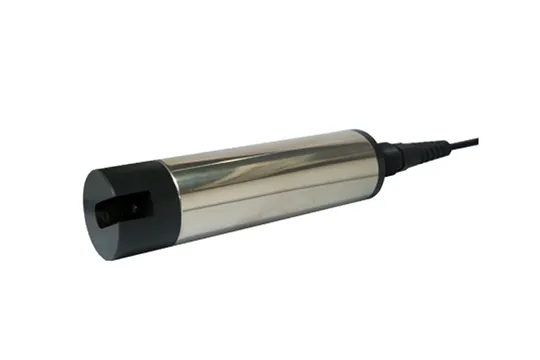
This infrared sludge concentration probe features an automatic wiper self-cleaning window. It measures high-range suspended solids from 0–200000mg/L, resists sludge adhesion, and perfectly matches supporting transmitters for long-term submerged monitoring of aeration tanks and sedimentation pools.
TSS/SS Transmitters
TSS/SS Transmitters
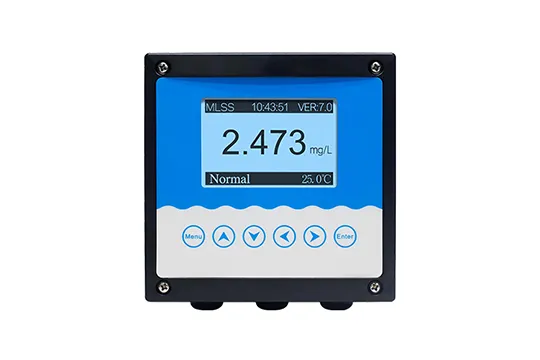
Digital wall-mounted transmitter dedicated to TSS sensors, equipped with LCD display and multi-point calibration. It outputs 4-20mA and RS485 signals with limit relays, real-time tracking sludge density to control return sludge pumps in sewage biochemical treatment processes.

Which Industries Rely Most on TSS/SS Measurement Technology?

Municipal Wastewater Treatment Industry

It is the largest application field of TSS meters. Real-time MLSS monitoring in aeration tanks stabilizes microbial activity, while clarifier and outlet TSS data control sludge reflux and discharge standards, avoiding environmental fines and improving sewage purification efficiency.

Pulp & Paper Manufacturing

Paper wastewater carries massive fiber particles. TSS instruments monitor white water circulation and biochemical tank sludge density, reducing fiber waste, optimizing sludge discharge frequency, and ensuring factory effluent meets strict suspended solid emission limits.

Food & Beverage Processing

Slaughter, dairy and beverage wastewater contains heavy organic suspended solids. Online TSS sensors adjust air flotation and biochemical dosing automatically, boosting organic pollutant removal rate and cutting polymer flocculant consumption by over 20%.

Mining & Metallurgy

Mining slurry and tailing overflow carry mineral particles with heavy metals. Wide-range TSS probes monitor thickener underflow and tailwater discharge, preventing sediment leakage and realizing cyclic reuse of mine process water to lower water consumption.

What Factors Affect the Performance of TSS/SS Measurement Instruments?

  • Measurement Instruments

    Sludge and dirt coverage on optical window

    Suspended sediment, biofilm and grease will block infrared light transmission of the sensor lens. Without regular automatic wiping, light attenuation occurs, leading to low reading deviation and unstable TSS detection results.

  • Fluctuations of Water Temperature

    Temperature changes alter water light transmittance and circuit signal output. Without built-in temperature offset correction, the instrument generates offset readings, especially in sewage with large seasonal temperature differences.

  • Unreasonable Calibration Operation

    Single-point calibration cannot eliminate full-range linear drift, while expired standard sludge solution also causes calibration errors. Incorrect calibration data will make all subsequent real-time measurements inaccurate.

  • Electromagnetic Interference on Site

    High-power blowers, pumps and frequency converters produce electromagnetic noise, which disturbs the weak optical signal transmitted by the sensor. This causes frequent jumping of TSS values on the display screen.

  • Abnormal Measuring Range Matching

    If users select a low-range sensor for high-concentration sludge tanks, signal saturation will happen. Mismatched gear ranges reduce resolution and fail to capture subtle suspended solid concentration changes.

  • Aging of Internal Optical Components

    Long-term underwater use leads to aging infrared transmitters and receivers, lowering light intensity. Slow signal drift accumulates over weeks, requiring periodic re-calibration to restore instrument precision.

What Factors Affect the Performance of TSS/SS Measurement Instruments?
We use cookies to offer you a better browsing experience, analyze site traffic and personalize content. Part of the tracking is necessary to ensure SEO effectiveness,
By using this site, you agree to our use of cookies. Visit our cookie policy to learn more.
Reject Accept