A pH meter measures how acidic or alkaline an aqueous solution is by converting the electrical potential generated by a pH-sensitive electrode into a numerical pH value. Understanding how does a pH meter work is important when selecting instruments for laboratory analysis, water treatment, chemical processing, food production and other industrial applications. Reliable measurement depends not only on the meter itself, but also on the electrode, reference system, temperature and calibration condition.
How Does a pH Meter Work?
A pH meter works by measuring the voltage difference between a pH-sensitive glass electrode and a reference electrode, then converting that electrical signal into a pH reading.
The glass electrode contains a special membrane that responds to hydrogen-ion activity in the sample. When the electrode is immersed in an aqueous solution, a potential develops across the glass membrane. The reference electrode provides a stable reference potential, allowing the instrument to determine the difference between the two electrical potentials.
The resulting signal is very small, so the meter uses high-input-impedance electronics to measure it without significantly affecting the electrode system. The instrument then processes the signal and displays the corresponding pH value.
The pH scale normally ranges from 0 to 14, with 7 considered neutral. Because pH is logarithmic, a change of one pH unit represents a tenfold change in hydrogen-ion activity. The scientific basis of pH measurement is also addressed in the IUPAC recommendations on pH measurement.
What Are the Main Components of a pH Meter?
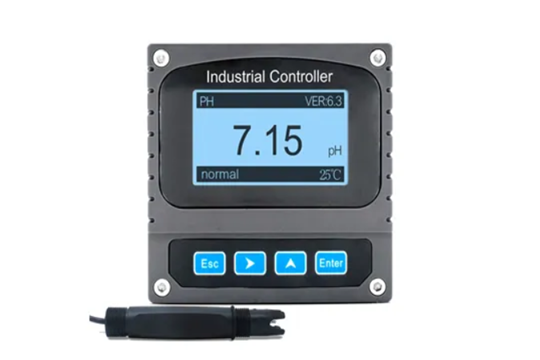
The main components of a pH meter are the sensing electrode, reference electrode, temperature measurement system and electronic transmitter or display unit.
pH sensing electrode: The glass membrane responds to hydrogen-ion activity and generates the measurement potential.
Reference electrode: It provides a stable reference potential against which the sensing-electrode potential can be measured.
Temperature sensor: It detects sample temperature so the instrument can compensate for temperature-dependent electrode response.
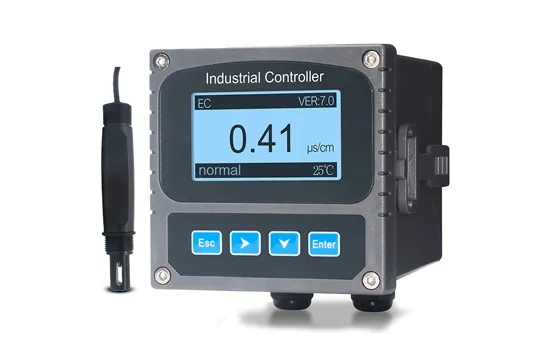
Meter or transmitter: It receives the low-level electrical signal, processes it and converts it into a readable pH value or industrial output signal.
Modern combination electrodes can integrate the sensing and reference functions into one probe, making installation and routine measurement more convenient. For industrial applications, an industrial pH sensor can be paired with a transmitter to support continuous monitoring and process integration.
How Is a pH Meter Calibrated?
pH meter calibration establishes the relationship between the electrode's electrical signal and known reference pH values so that subsequent sample measurements can be interpreted correctly.
Calibration is normally performed using standard buffer solutions with known pH values. The number of calibration points should match the expected measurement range. A system measuring samples across both acidic and alkaline conditions, for example, benefits from calibration points that cover the relevant range rather than relying on a single point.
EPA Method 150.3 specifies calibration requirements for drinking-water pH measurement and uses reference buffers to verify instrument performance. Under the specified procedure, the measured reference buffer should be within ±0.1 pH unit of its true value.
Calibration frequency also matters. Electrode contamination, aging, improper storage and changes in sample conditions can cause measurement drift. Users should therefore establish a calibration and verification schedule according to the application and required measurement reliability.
For routine calibration, pH meter calibration solutions should be selected according to the expected measurement range and the requirements of the measurement system.
Where Are pH Meters Used in Industry?
Industrial pH meters are used wherever acidity or alkalinity affects product quality, chemical reactions, equipment protection or water-treatment performance.
| Application | What pH measurement helps control | Typical approach |
|---|
| Water treatment | Chemical dosing and water quality | Online or laboratory measurement |
| Wastewater treatment | Biological and chemical treatment conditions | Online monitoring or sampling |
| Chemical processing | Reaction and process conditions | Continuous industrial measurement |
| Food and beverage | Product and process consistency | Laboratory or inline systems |
| Pharmaceutical production | Process and quality control | Controlled laboratory or online systems |
In wastewater applications, sensor selection becomes particularly important because suspended solids, fouling and aggressive chemicals can affect electrode performance. When evaluating pH probes for wastewater, buyers should consider sample composition, cleaning requirements, installation position and expected maintenance intervals.
For automated plants, pH measurement can also be connected with instrumentation and process-control systems, allowing measured values to support alarms, dosing systems, PLCs and other control functions. In systems where multiple process parameters are monitored together, electronic pressure sensors can be integrated alongside pH measurement to provide a broader view of operating conditions. For applications requiring traceable measurement performance, users can also refer to NIST pH metrology guidance when establishing measurement and calibration practices.
Conclusion
A pH meter works by converting the electrochemical potential generated by a pH-sensitive electrode and reference system into a measurable pH value. Although the basic principle is straightforward, reliable industrial measurement depends on electrode selection, temperature effects, calibration, sample conditions and maintenance. The 0–14 pH scale is logarithmic, so even a one-unit change represents a tenfold change in hydrogen-ion activity. For industrial users, selecting the appropriate sensor and transmitter together with a suitable calibration strategy is essential for stable measurement. JUJEA provides pH measurement solutions for liquid-analysis and process-control applications.
FAQ
How accurate is a pH meter?
Accuracy depends on the electrode, calibration, sample conditions, temperature and instrument specification. Proper calibration and maintenance are essential for reliable results.
Why does a pH meter need calibration?
Calibration establishes the relationship between the electrode signal and known reference values and helps compensate for changes in electrode response.
How often should a pH meter be calibrated?
The required frequency depends on the application, electrode condition and measurement requirements. Critical industrial systems may require more frequent verification.
What is the difference between a pH sensor and a pH meter?
A pH sensor or electrode detects the electrochemical signal, while the pH meter or transmitter processes that signal and displays or outputs the calculated pH value.
Can pH meters measure wastewater?
Yes. pH measurement is widely used in water and wastewater monitoring, but wastewater applications require suitable electrode materials, installation and cleaning practices.
Does temperature affect pH measurement?
Yes. Temperature can affect both the sample's actual pH and the electrode's response. Temperature compensation can correct part of the instrument response but does not eliminate changes in sample chemistry.
Ethan Liu
Ethan Liu is JUJEA's technical content specialist, translating complex sensor integration and industrial automation concepts into practical insights for engineers, system integrators, procurement professionals, and decision-makers worldwide.


 한국어
한국어 français
 Deutsch
 Español
 italiano
 русский
 português
 العربية
 tiếng việt
 čeština